
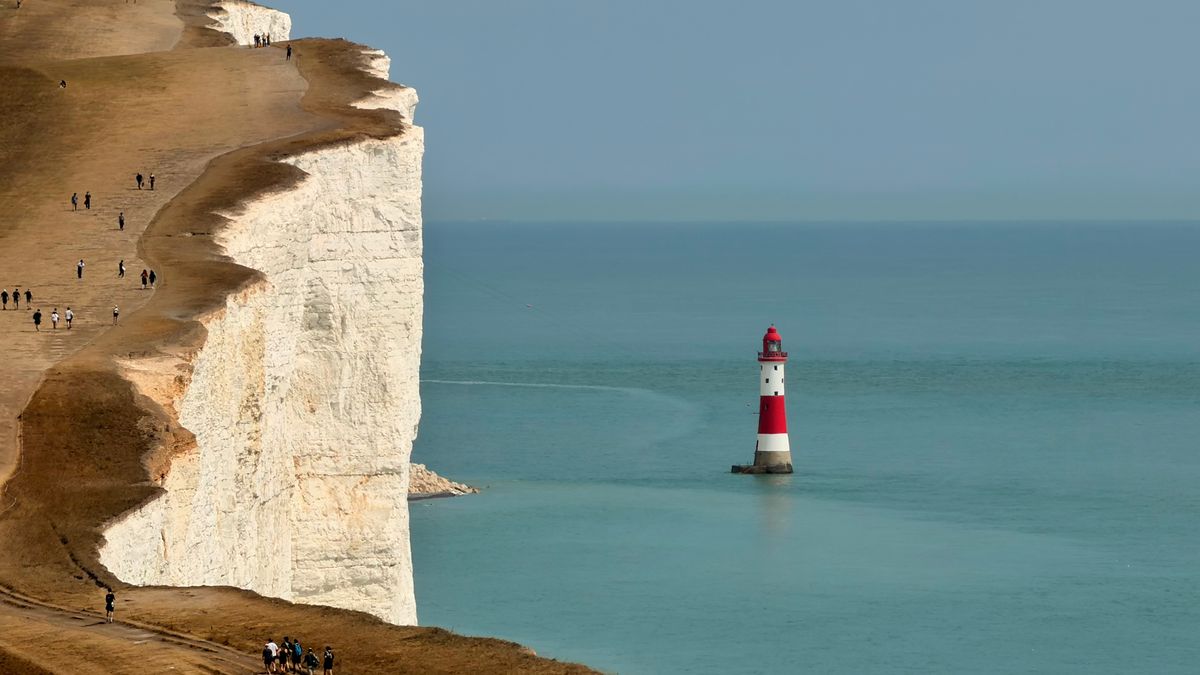
For most of the twentieth century, a lighthouse meant people. Three keepers on a rock station, two on a shore light, each taking a watch, each keeping the lamp burning through fog and gale. Then came automation, and one by one those posts closed. By the end of the 1990s, the last permanently crewed light in the country had gone automatic, and a way of life that had shaped entire coastal communities quietly came to an end.
Except it didn't entirely. Along the British coastline there is still a small, determined body of people who spend their days beside the light: technicians, attendants, volunteers and heritage staff. They climb the same spiral stairs, they wipe the same salt off the same glazing, and they write down what the weather is doing, just as their predecessors did. The uniform has changed. The reason for the work has not.
A modern lighthouse is a piece of precision engineering sitting in one of the most hostile environments on earth. Salt, wind, spray and temperature swings attack everything. So the maintenance round is constant, and it is refreshingly physical.
None of it is glamorous. All of it matters. Aids to navigation are only as reliable as the last person who checked them.
Keepers have always been weather observers as much as lamplighters, and that habit has not died out. Wind speed and direction, visibility, sea state, cloud, the arrival of fog — these observations go into a logbook that becomes, over decades, an extraordinary record of a single stretch of coast.
That record has real value. It helps show how storms have shifted, how often the fog rolls in, and how a coastline behaves over time. When you walk past a lighthouse and see someone noting conditions on a clipboard, you are watching the continuation of a tradition that predates most of our weather institutions. It is unglamorous, methodical work, and it is one of the quietest contributions coastal heritage makes to coastal science.
Stone can be repaired. Memory cannot be replaced. This is where the modern keeper's role overlaps most movingly with heritage.
Many stations now welcome visitors, and the people who show them round are often the ones who know the place best — former keepers, their families, and local volunteers who grew up with the light flashing across their bedroom wall. Their stories are specific and worth hearing: the night the relief boat couldn't get through, the keeper's wife who kept the log while her husband was ill, the shipwreck that brought half the village onto the cliff path.
If you visit, ask questions. Ask about the names carved into the wall, the old photographs in the store room, the wreck chart. Oral history fades fast, and it fades fastest in places where the working community has dispersed. The person behind the counter may be the last link to a story that would otherwise be lost within a generation.
Lighthouse walks are among the finest coastal routes in the country, but they deserve respect. A few things worth planning before you set out:
You do not need a lighthouse family connection to help. Coastal heritage groups are almost always short of hands, and the roles are varied — stewarding a visitor room, helping with a repaint, cataloguing photographs, recording memories from older residents, or simply reporting a fault you notice on a walk.
What keepers have always understood is that a lighthouse is not just a tower. It is a promise: that somebody is paying attention, night after night, so that others can find their way. Automation changed who keeps that promise. It never changed the promise itself. Walking out to a light, and taking a moment to look up, is a small way of saying it still counts.

Hi, my name is Anthony kuber. I am artist and fashion designer.
I love to travel and writing blogging.
Your email address will not be published. Required fields are marked *
Software Developer & Writer
Hey, I'm Diva, a developer and writer blending code and creativity. I'm driven by a deep curiosity and a relentless pursuit of excellence. Join me as I craft digital solutions and captivating stories.


