
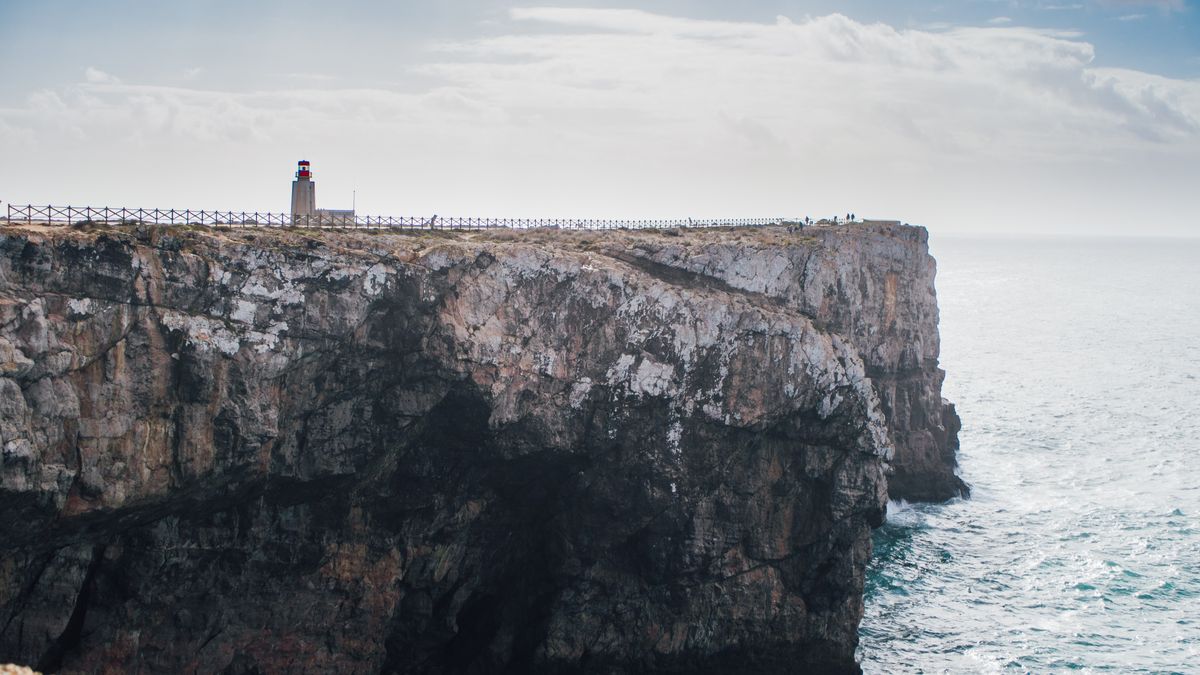
There is nothing quite like standing on a headland in late spring, wind tugging at your jacket, while thousands of seabirds wheel and cry below you. Guillemots crowd the ledges in their neat brown-and-white ranks, razorbills slip past with a whistle of wings, and kittiwakes call their own name from nests glued to the narrowest of shelves. These are among the most thrilling wildlife spectacles in the British Isles, and many of them are a short drive from a car park.
The catch is that the very cliffs which make these reserves so spectacular are also fragile, both geologically and ecologically. A little knowledge — and a good pair of binoculars — will keep you safe, keep the birds undisturbed, and give you far better views than the risky approach ever could.
Arrive with a plan. Coastal cliffs are constantly eroding, and the edge you can see is rarely the edge that will hold you. Grass frequently overhangs a void of a metre or more, and sandstone, chalk and boulder clay all crumble without warning. Look for cracks running parallel to the cliff line, patches of bare soil and hairline fissures in the turf — all signs that the top is undercut and best avoided.
It also helps to know where the birds are. Guillemots and razorbills prefer broad, sloping ledges; kittiwakes choose the tightest, most exposed shelves; fulmars nest on grassy banks and will spit foul-smelling oil if you press them too closely. Large splashes of white on a cliff face usually mean a colony — a useful clue when scanning from a distance. On the cliff top itself, look down before you walk: oystercatchers, skuas and gulls nest in plain sight, eggs are wonderfully camouflaged, and a single careless footstep can end a breeding attempt.
Safety advice for cliffside walking is simple, but it is worth repeating because accidents so often involve experienced people who were only briefly careless.
If you are walking with children, hold hands near the cliff top and agree a boundary in advance — a path edge, a fence line, a particular rock. It is far easier to keep to a rule than to judge a hazard.
Good optics are the whole point of a cliffside visit: they let you stand comfortably back and still see every detail. A pair of 8x42 or 10x42 binoculars suits most people, while a spotting scope on a tripod is superb for distant colonies — set it up several metres in from the edge, never on it.
Technique matters as much as equipment. Hold your elbows close to your body, or brace against a fence post, a wall or your own knee. Scan slowly, in overlapping strips, rather than sweeping about. Start with the bare cliff face to pick out shape and movement, then work along the ledges. Listen as well: the harsh chatter of a kittiwake colony or the purring of puffins often gives away birds you would otherwise miss. Binoculars also give you one great advantage over the unaided eye — you can watch behaviour without the birds ever registering your presence, which is precisely when seabirds are at their most fascinating.
Between roughly March and August, the cliffs are a nursery rather than a spectacle, and everything you do should be shaped by that. Disturbance can cause adults to leave eggs or small chicks exposed to gulls, crows and the cold, and in the case of some species it is a legal offence.
The best cliffside visits are quiet, unhurried ones. Take your litter home, including fruit peel and crumbs that attract gulls and rats, and stick to marked paths where the turf is thin and easily eroded. A few minutes spent at a safe distance with binoculars will show you more — puffins billing on a ledge, a peregrine stooping along the cliff face, a shag stretching its neck in the sun — than an hour peering nervously over a crumbling edge. Enjoy the coast, keep your footing, and let the birds get on with the important business of raising the next generation.

Hi, my name is Anthony kuber. I am artist and fashion designer.
I love to travel and writing blogging.
Your email address will not be published. Required fields are marked *
Software Developer & Writer
Hey, I'm Diva, a developer and writer blending code and creativity. I'm driven by a deep curiosity and a relentless pursuit of excellence. Join me as I craft digital solutions and captivating stories.


