
Ask ten gamblers what separates a winning session from a losing one and you'll get ten different answers. Some will swear by a "hot" slot machine. Others will tell you poker is pure math. A few will shrug and say the house always wins eventually. None of them are entirely wrong — but none of them are telling the whole story either.
The truth is that iGaming sits on a spectrum. At one end you have games where every decision is irrelevant, and at the other you have games where the better player wins over time almost by default. Knowing where any given game falls on that spectrum is the single most useful thing you can learn as a player, because it changes how you should approach it, how you should bankroll it, and whether you should be playing it at all.
Let's start with the games that get the most traffic: slots, roulette, and most lottery-style products. On a modern video slot, the outcome of every spin is determined by a random number generator the moment you hit the button. There is no pattern, no memory, no cycle. A machine that hasn't paid out in three hours is not "due" — it is exactly as likely to hit the jackpot on the next spin as it was on the first.
This is where a lot of casual players lose money on bad reasoning. They chase losses on a slot because it "feels cold," or they stick with a machine because it "just paid." Neither instinct has any basis. What does matter is the return-to-player (RTP) percentage. A slot with 96% RTP will, over millions of spins, return 96 cents for every dollar wagered. A slot with 92% returns 92 cents. That four-point gap sounds small, but over a few thousand spins it is the difference between a fun evening and a bloodbath.
If you're playing these games, play them for entertainment, not for profit. Set a budget, treat it as the cost of the evening, and walk away when it's gone. That is not defeatism — it is the only rational approach to a negative-expectation game.
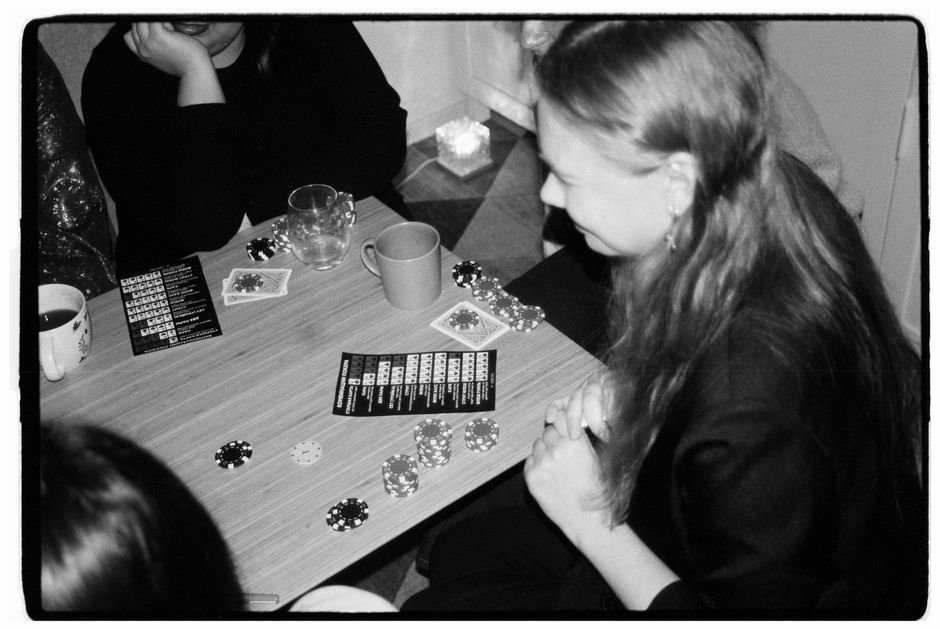
Now the other end of the spectrum. No-limit Texas Hold'em is the clearest example of a game where a skilled player will consistently beat a weaker one, not because of luck, but because of decision quality over thousands of hands. The variance is real — you can play perfectly and lose a session, or play badly and win one. But over 50,000 hands, the better player's edge compounds into something undeniable.
The same logic applies to sports betting, with one important caveat: it's not about picking winners, it's about finding value. A bet on a heavy favourite at odds of 1.20 is often a losing proposition in the long run because the implied probability is higher than the actual probability. A bet on an underdog at 3.50 can be profitable even if it loses more often than it wins, as long as the true probability is better than 28.6%. Professional bettors don't brag about their win rate — they brag about their closing line value.
These are the games where strategy genuinely moves the needle, but only within a narrow band. In blackjack, playing basic strategy — the mathematically optimal decision for every hand combination — reduces the house edge to roughly 0.5% on a typical 3:2 payout table. Play by gut instead and that edge balloons to 2% or more. That's the difference between losing $50 and losing $200 over a few hours at $10 hands. Further details are available through ONBET.
Card counting can push the edge into positive territory, but only if you're playing single or double-deck games with favourable rules, and only if the casino doesn't shuffle too frequently. On a modern six-deck shoe with continuous shuffling machines, counting is essentially dead. Video poker is similar: Jacks or Better at full pay (9/6) returns 99.5% with perfect play, but the difference between perfect and casual play is often 2–3 percentage points. That's a real edge, and it's one you can capture.
Here's the part that trips up even experienced players: the house edge is not a target, it's a fact. Every game is designed so the operator profits over time. Your job is not to beat the math — it's to understand which games give you the best chance within the math, and to size your bets so that a bad run doesn't wipe you out.
A helpful mental model: think of every wager as paying a small fee for the entertainment. On a 96% RTP slot, a $1 spin costs you four cents in expected value. On a 97.3% European roulette table, a $10 bet costs you 27 cents. On a poker hand against weaker opponents, that fee can flip into a gain. Know which side of that ledger you're on. More background can be found at ON BET.
The players who last in iGaming — who actually enjoy it for years without financial damage — share a few traits. They play games where their decisions matter, or they play games of pure chance with strict budgets and no delusions. They track their results. They understand that a bad session is not a sign that the system is rigged, and a good session is not proof of skill. They treat the whole thing as a cost-controlled hobby with occasional upside.
That's not a cynical view. It's the most honest one. The games are designed to be enjoyable, and the operators are running a business, not a charity. The players who thrive are the ones who accept that reality and make decisions inside it rather than fighting it.
So the next time you sit down at a table or fire up a slot, ask yourself one question: is this a game where I can actually influence the outcome? If the answer is yes, study it, track it, and treat it seriously. If the answer is no, then treat it like a night at the movies — fun, finite, and fully paid for in advance.

Hi, my name is Anthony kuber. I am artist and fashion designer.
I love to travel and writing blogging.
Your email address will not be published. Required fields are marked *
Software Developer & Writer
Hey, I'm Diva, a developer and writer blending code and creativity. I'm driven by a deep curiosity and a relentless pursuit of excellence. Join me as I craft digital solutions and captivating stories.


